Overcoming MFA Test Automation Challenges

Multi-factor authentication (MFA) has become an essential tool for safeguarding sensitive systems. As businesses strive to comply with regulatory requirements, the integration of MFA into workflows is now standard practice. However, automating tests for MFA-enabled systems poses unique challenges for QA teams. In this article, we will focus on a critical topic: what challenges arise

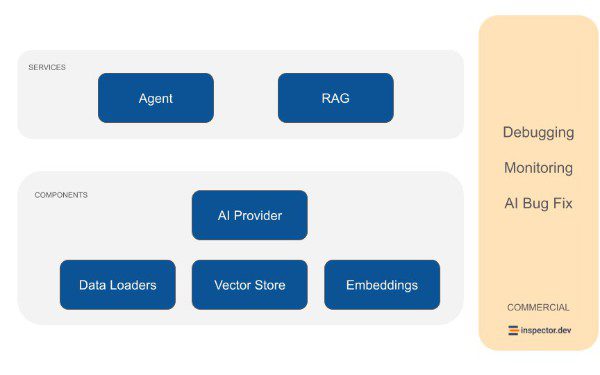
Introducing Neuron AI: Create Full-Featured AI Agents in PHP

In the last few months, I have worked hard to push the integration of AI agents into my SaaS product to a higher level. It was a very long journey, starting more than a year ago with the first experiments. I have to say that understanding all the moving parts of an AI-driven system was

Your Ultimate Website QA Checklist

A detailed website QA checklist helps make sure every aspect of the website is tested, whether through manual or automated testing approaches. It usually covers parameters like functionality, performance, usability, security, and compatibility across various browsers and devices. By following the website QA checklist, testers can test the website step-by-step, making sure everything works well


Achieving Zero Trust and Air-Gapped IaC in IBM Cloud With Schematics

As modern enterprises continue their journey toward cloud-native infrastructure, security and automation aren’t just nice to have; they’re absolutely essential. Particularly in regulated industries like finance, government, and healthcare, there’s a growing need to deploy Infrastructure as Code (IaC) within isolated (air-gapped) environments while also embracing zero-trust principles. In this blog, we’ll walk through how

Understanding ldd: The Linux Dynamic Dependency Explorer

In the world of Linux system administration and software development, understanding how executables interact with shared libraries is crucial. Enter ldd (List Dynamic Dependencies), a powerful command-line utility that helps you peer into the complex web of library dependencies that make your applications run.  In this comprehensive guide, we’ll explore ldd, its usage, security considerations,

AI Protection: Securing The New Attack Frontier

We’re amidst a paradigm shift in society where many product verticals are being reimagined through an ‘AI-first’ architecture. An AI-first architecture is one where much of the core business logic is driven by AI, and the product is architected to fully exploit the capabilities of the underlying AI models. A striking example is IDEs; intelligent

Seamless Security Integration Strategies in Software Development

During the software development, builders face challenges between building a better product faster versus dealing with various responsibilities that come with software development. Getting security right is one of them. Due to the increased cyber attacks, organizations started focusing on security, which resulted in developers spending more time in security-related activities in recent years.  This

Why Generative AI Needs Human Oversight to Build Trust

In 2023, a generative AI-powered chatbot for a financial firm mistakenly gave investment advice that violated compliance regulations, triggering regulatory scrutiny. Around the same time, an AI-powered medical summary tool misrepresented patient conditions, raising serious ethical concerns. As businesses rapidly adopt generative AI (GenAI), these incidents highlight a critical question: Can AI-generated content be trusted

Maintaining ML Model Accuracy With Automated Drift Detection

In production machine learning (ML) systems, data drift is defined as changes in the statistical features of input data over time. Such shifts can weaken model performance, resulting in erroneous predictions. As a result, monitoring and mitigating data drift is critical for maintaining the trustworthiness of machine learning models. KitOps is an open-source DevOps solution

Cost-Aware Resilience: Implementing Chaos Engineering Without Breaking the Budget

Modern distributed systems, like microservices and cloud-native architectures, are built to be scalable and reliable. However, their complexity can lead to unexpected failures. Chaos engineering is a useful way to test and improve system resilience by intentionally creating controlled failures. However, it can be costly due to resource usage, monitoring needs, and testing in production-like