Implementing Secure API Gateways for Microservices Architecture

Modern microservice architectures consist of many independently deployable services, which brings new security challenges. One crucial best practice is to use an API Gateway as a centralized entry point to enforce security policies. In this article, we explore how to implement a secure API gateway in a microservices environment and demonstrate authentication configuration with code

5 Common Security Pitfalls in Serverless Architectures

Serverless architecture removes much of the overhead costs tied to infrastructure, but it shifts security responsibilities toward code and permissions. Instead of managing servers, developers must focus on how functions interact and what they trust. 1. Over-Privileged IAM Roles One of the most widespread issues in serverless security is the use of overly permissive identity and access

Why Your DLP Policies Fall Short the Moment AI Agents Enter the Picture

I have been working in enterprise data security for a while now, and I have watched the threat landscape shift many times. Ransomware, phishing, insider threats, and cloud misconfigurations. Each wave brought new problems, and organizations learned, adapted, and invested. But what is happening today with AI agents feels different. It is not just a

Detecting Advanced Persistent Threats Using Behavioral Analytics and Log Correlation

Advanced persistent threats are characterized by determined, well-resourced adversaries that pursue objectives over extended periods, adapt to defensive pressure, and work to maintain enough access to achieve mission goals.   That definition carries a practical implication for detection engineering: isolated alerts rarely capture the full sequence of actions, because the campaign is designed to look

Stateless JWT Auth Microservice Architecture With Spring Boot 3 and Redis Sentinel

In this article, I will discuss a highly available solution developed using Spring Boot 3 and Spring Security 6 to address the “centralized authentication method” problem frequently seen in modern microservice ecosystems. We are not simply moving to an “authorization service”; we are examining the cache-first pattern, which minimizes DB usage, and the Redis Sentinel

Architecting Zero-Trust AI Agents: How to Handle Data Safely

The transition from “Chatbots” to “Autonomous Agents” represents the most significant shift in enterprise software architecture since the move to the cloud. However, as we grant AI agents the ability to use tools, access databases, and execute code, we introduce a terrifying new attack surface. In a traditional setup, a user interacts with a model.

Catching Data Perimeter Drift Before It Reaches Production

Cloud providers provide tools for customers to prevent data exfiltration attempts by creating a data perimeter — a set of permission guardrails that ensure that only trusted identities from expected networks can access trusted resources [1]. For example, a company can set up controls so that users within its organization can access only their company-specific

The Hidden Cost of Overprivileged Tokens: Designing Messaging Platforms That Assume Compromise

Large messaging platforms rarely collapse because authentication is broken. They collapse because authorization quietly expands, then stays expanded. The failure mode is not a single bug but a system property: credentials that were created for one narrow purpose become reusable, long-lived, and operationally too useful, until they function as capability grants far beyond the original

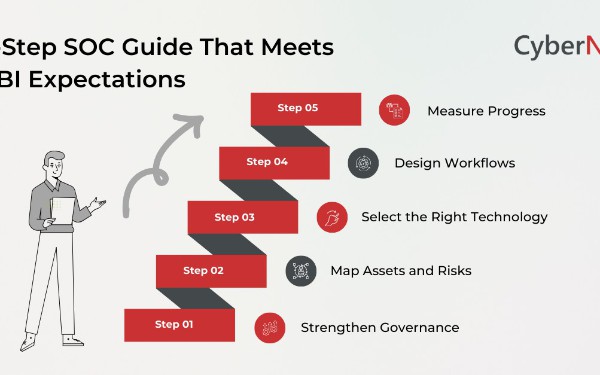
A 5-Step SOC Guide That Meets RBI Expectations and Strengthens Security Operations

Financial institutions operate in one of the most regulated cybersecurity environments in the world. With increasing digital adoption, expanding attack surfaces, and sophisticated threat actors, the role of the Security Operations Center (SOC) has become central to meeting regulatory expectations — particularly those outlined by the Reserve Bank of India (RBI). However, compliance alone does