Architecting Zero-Trust AI Agents: How to Handle Data Safely

The transition from “Chatbots” to “Autonomous Agents” represents the most significant shift in enterprise software architecture since the move to the cloud. However, as we grant AI agents the ability to use tools, access databases, and execute code, we introduce a terrifying new attack surface. In a traditional setup, a user interacts with a model.

Catching Data Perimeter Drift Before It Reaches Production

Cloud providers provide tools for customers to prevent data exfiltration attempts by creating a data perimeter — a set of permission guardrails that ensure that only trusted identities from expected networks can access trusted resources [1]. For example, a company can set up controls so that users within its organization can access only their company-specific

The Hidden Cost of Overprivileged Tokens: Designing Messaging Platforms That Assume Compromise

Large messaging platforms rarely collapse because authentication is broken. They collapse because authorization quietly expands, then stays expanded. The failure mode is not a single bug but a system property: credentials that were created for one narrow purpose become reusable, long-lived, and operationally too useful, until they function as capability grants far beyond the original

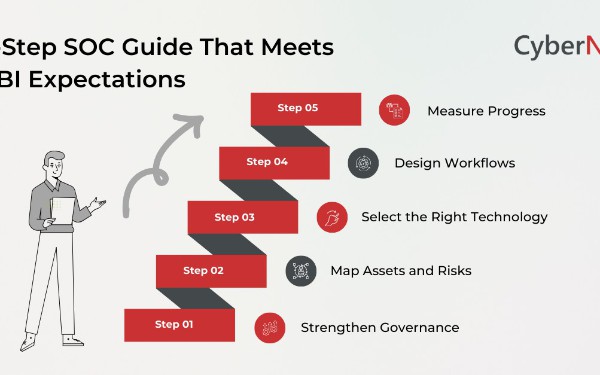
A 5-Step SOC Guide That Meets RBI Expectations and Strengthens Security Operations

Financial institutions operate in one of the most regulated cybersecurity environments in the world. With increasing digital adoption, expanding attack surfaces, and sophisticated threat actors, the role of the Security Operations Center (SOC) has become central to meeting regulatory expectations — particularly those outlined by the Reserve Bank of India (RBI). However, compliance alone does

Evaluating SOC Effectiveness Using Detection Coverage and Response Metrics

Security Operations Center evaluation often collapses into counting activity: alerts processed, cases closed, and tools deployed. Those numbers are easy to collect but frequently mislead because they blend workload, noise, and adversary pressure. A more defensible approach evaluates the SOC as an operational capability with two linked outcomes: relevant adversary behavior becomes observable as actionable

How to Detect Spam Content in Documents Using C#

Enterprise endpoints accept file uploads from a wide range of sources, including vendors, customers, partners, and anonymous external users. The content within those documents is largely trusted by default, especially if it passes a virus and malware scan. The problem is that this doesn’t account for a different type of risk: documents that are free

Your API Authentication Isn’t Broken; It’s Quietly Failing in These 6 Ways

Most API authentication setups don’t fail loudly. They fail quietly, and by the time you notice, something else is already wrong. APIs sit at the center of most modern applications. They connect frontends, microservices, and third-party integrations. In theory, we protect them using OAuth, JWTs, or API keys. In practice, that’s usually where things start

Detecting Bugs and Vulnerabilities in Java With SonarQube

The security audit report landed unexpectedly. It highlighted a critical vulnerability in our payment processing module. We had passed all unit tests. We had passed all integration tests. The code review looked clean. Yet the auditors found a hardcoded API key hidden in a utility class. This key allowed access to our third-party payment gateway.

Securing Everything: Mapping the Right Identity and Access Protocol (OIDC, OAuth2, and SAML) to the Right Identity

Overview Identity and access security is built on two fundamental requirements: Authentication (AuthN) — who you are, and Authorization (AuthZ) — what you are allowed to do. Every secure system must answer both questions clearly and consistently. In modern architecture, these questions are posed to two primary categories of actors trying to access applications:

Bridging Gaps in SOC Maturity Using Detection Engineering and Automation

Security operations centers often mature in uneven increments: telemetry expands faster than normalization, alerting grows faster than triage capacity, and response playbooks exist without reliable signals to trigger them. SOC maturity is best treated as the ability to operate a stable feedback loop in which detection and response are governed, measured, and improved continuously as